
News Article
Our Earth Day Commitment: Planting for the Future
April 22, 2026As a company whose very existence depends on forest health, sustainability has always been central to how we operate at Patrick Lumber Company. This Earth Day, that commitment is visible on the hillside above our Timber Hall, where we planted hundreds of seedlings in early 2026, prioritizing 500 Oregon White Oak.
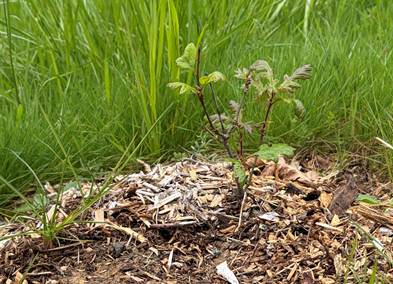
Oregon White Oak is a vital native species in the Pacific Northwest, taking up to 50 years to reach maturity, but capable of living 500 years. These slow-growing, long-lasting hardwoods provide food and shelter for more than 200 species, including the western bluebird and western gray squirrel, and are among the most fire-resistant trees native to Oregon. “Planting trees that won’t reach maturity in our lifetime is, to us, a clear expression of forest stewardship and representative of our commitments,” said Lena Jacobson, controller at PLC.
In recent years, however, faster-growing trees like Douglas Fir have crowded them out, making active restoration increasingly important. “The best time to plant an Oregon White Oak was 100 years ago,” said Zack Halsey, a PLC trader. “The second best time is today.”
This year’s planting was guided by multiple goals, including carbon sequestration, soil health, and fostering and preserving wildlife habitats. Additionally, Oregon White Oaks are unique as one of the most fire-resistant trees native to the area, a key benefit that supports protecting both the land and our facilities in the long term. But for us, the project represents something bigger than land management.
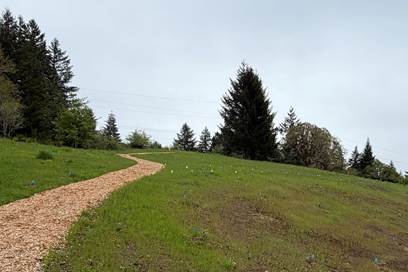
“Unlike so many other building materials, wood is a fully renewable resource,” said Jacobson. “We always revert back to the concept of biophilia: the innate human tendency to seek connections with nature.” Jacobson goes on to explain that Oregon White Oak can provide hundreds of years of ecosystem services, and wood products that come from responsibly managed forests carry that legacy forward. “When you buy from us, you’re part of that life cycle,” adds Jacobson, “something that endures and inspires.”
After more than 110 years in business, thinking in centuries comes naturally to us. These 500 seedlings are one more way we’re putting our commitment to forest stewardship and our belief in the long game into practice — not just for the next quarter, but for the next generation.
“We are committed to this facility, this community, and to our responsibility to the land we operate on for the long haul,” says Jacobson.

