
1915 to Present
2026
The Loop That Pays
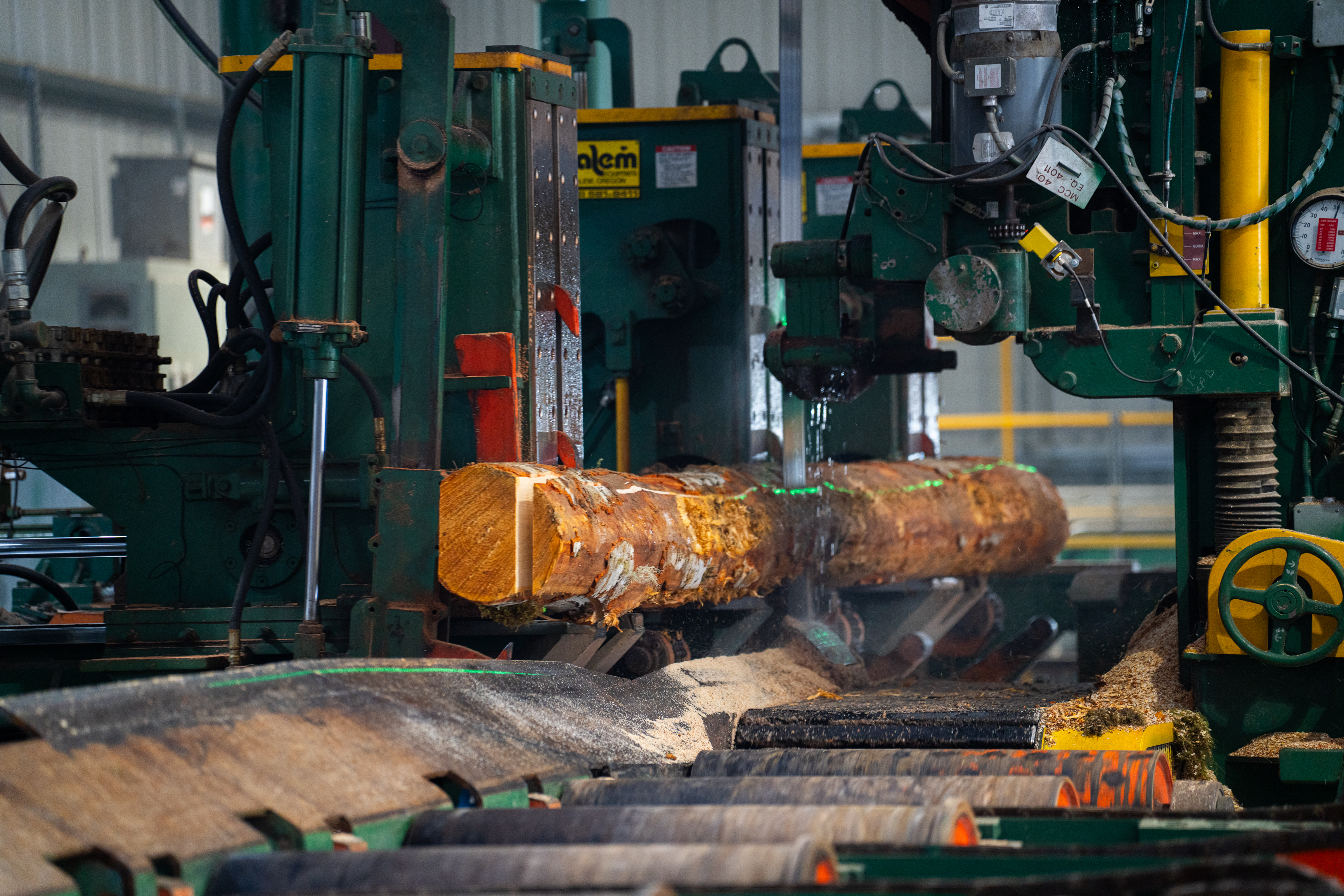
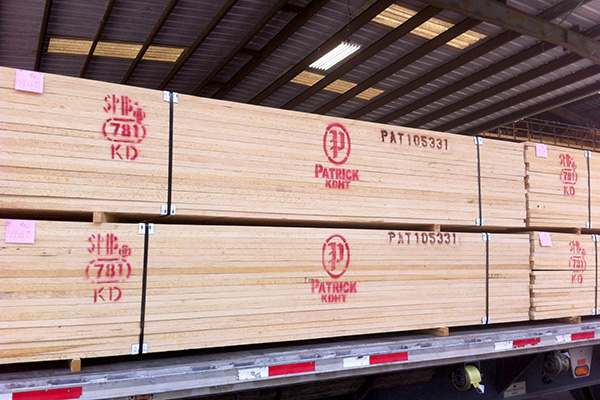
Patrick Hardwoods put a saw to the trees other mills would not take. Oregon white oak, bigleaf maple, madrone, myrtle, ash, chinquapin, and tan oak, much of it thinned from crowded stands or recovered from fire salvage, wood that used to be burned or chipped. The mill was built largely by hand from the remnants of a dozen others, and when it runs full it cuts about four hundred thousand board feet a month. The U.S. Forest Service backed it with a one million dollar grant. One cut now pays four ways: it thins the forest against fire, it turns wasted wood into lumber, it puts people to work in a town that had watched its mills close, and it locks carbon into floors and tabletops for another century. The floor of the new Portland airport terminal is Oregon white oak, the same wood Patrick now saws from logs that once had nowhere to go.

2025
Patrick Hardwoods Established
Patrick Hardwoods began operating in July 2025, a hardwood sawmill on a twelve-acre parcel adjoining Patrick Lumber Manufacturing in Philomath, built to cut the native Oregon species most mills were never set up to take. Alder, bigleaf maple, madrone, golden chinquapin, tan oak, myrtle, ash, and Oregon white oak come in as logs and leave as rough-sawn lumber. Much of that wood would otherwise have been burned or chipped. It was the first time in Patrick’s history that the company made hardwood, and it opened a door for a whole class of trees that had none.

2024
Natalie Heacock
Natalie Heacock came to Patrick Lumber in 2014 as an accounting manager, hired to work under longtime CFO Mark Auxier and learn the books of a trading company from the inside. She earned the controller’s chair, then Auxier’s, running finance for every company Patrick owns. In 2024 the board named her president, the first woman to hold the job in the company’s history. She follows the line of McCracken, Yeager, Carstensen, Halsey, Rodway, and Burns, each of whom ran the company for a stretch and handed it on. Patrick has always been led from the inside, and it still is.
2023
A New Home in Philomath
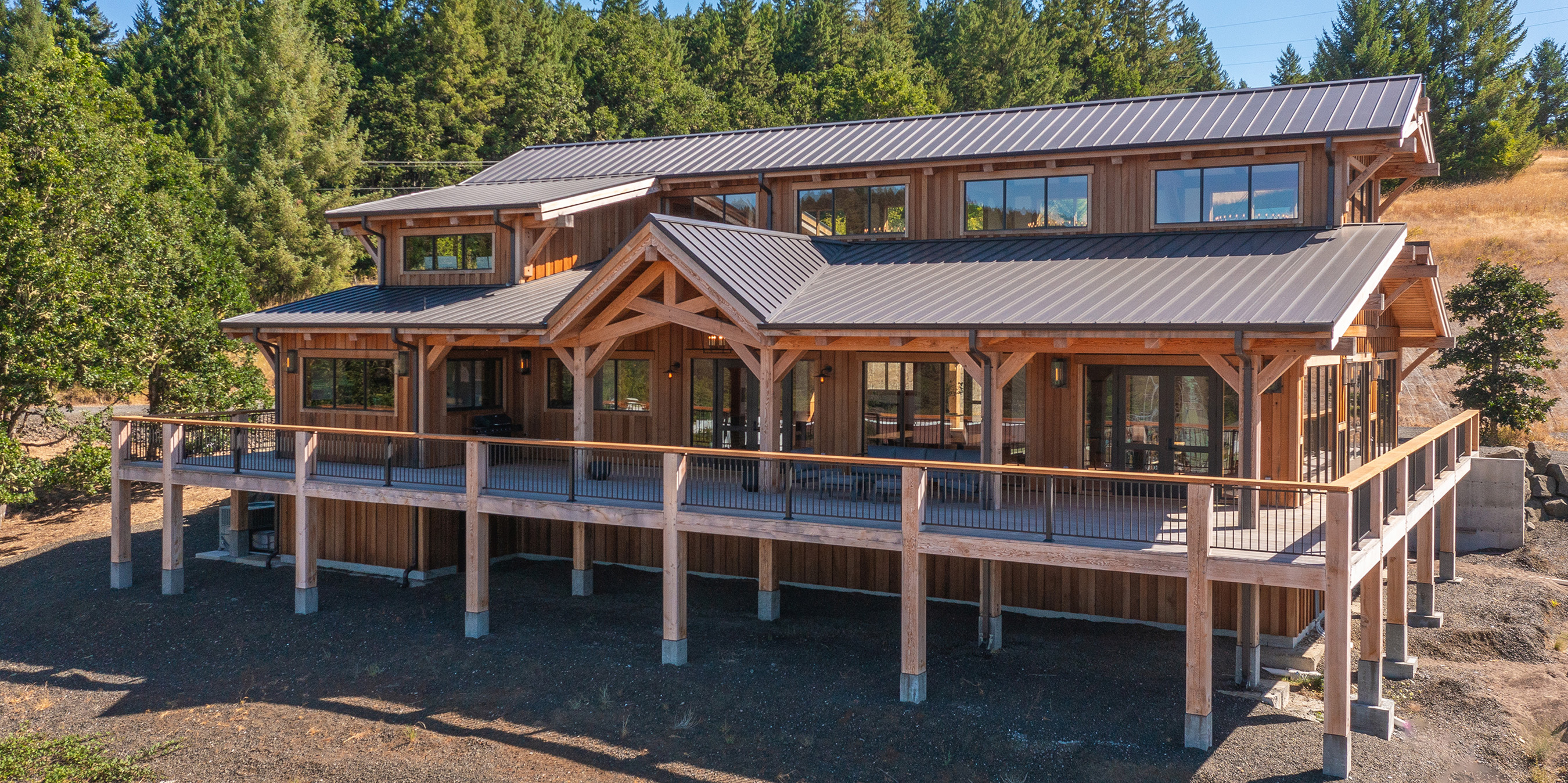
After more than a century as a Portland company, Patrick Lumber built its own home and moved to Philomath, Oregon. The lease was ending and the wood was down in Benton County, so the company put its office where the wood was. Timber Hall was designed off an old barn and framed almost entirely in salvage: the timber frame from logs off the 2020 Oregon fire, the siding resawn from the reclaimed redwood of a 1937 bridge. Every board inside is a species Patrick ships, from Alaska yellow cedar decking to vertical-grain Douglas fir trim. The building is a carbon bank, framed with about twice the wood it needed, because more wood makes a room feel like a forest.

2016
Patrick Lumber Manufacturing
In 2016 Patrick bought the old Mary’s River Lumber yard in Philomath, an original eight acres later grown with adjoining twenty-acre and two-acre purchases, and rebranded it Patrick Lumber Manufacturing. For the first time in a century of trading, the company owned the means to make the wood, not just move it. The draw was the kilns already standing on the site, since you cannot dry lumber without them. PLM gave Patrick its own Douglas fir and hemlock production, and it put the company down in Benton County, where it would later build its home.
2015
100 Year Anniversary
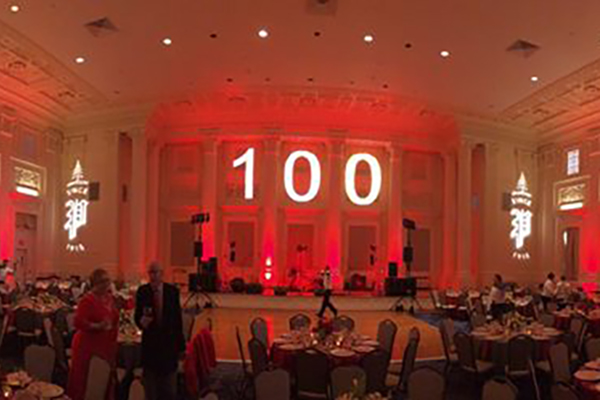
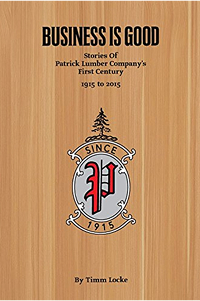
Patrick Lumber reached its hundredth year in 2015, still trading wood, still owned by its people. To mark the century the company published Business Is Good, Timm Locke’s history of Patrick’s first hundred years, built in part from oral histories recorded with longtime traders and owners. A century is a long run for any company and a rare one for a family lumber business. The book set the stories down before they could be lost.
2000
Wood Source Added to Its Portfolio
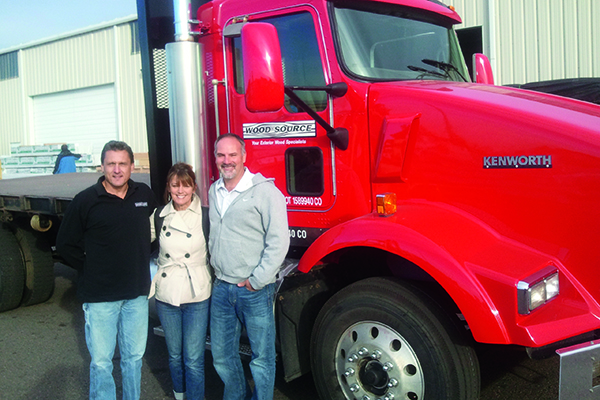
The same conversations that led to the 1999 purchase also started Wood Source. Cris Schureman had come to Dave Halsey to launch a distribution business and walked out of the meeting learning that Halsey was buying Patrick Lumber instead. Just after Christmas 1999, Schureman and his partner Martin Schwab left their jobs and started Wood Source, a Patrick subsidiary in the Denver area. It gave Patrick a distribution arm in the Rocky Mountain market, and Schureman and Schwab run it still.
1999
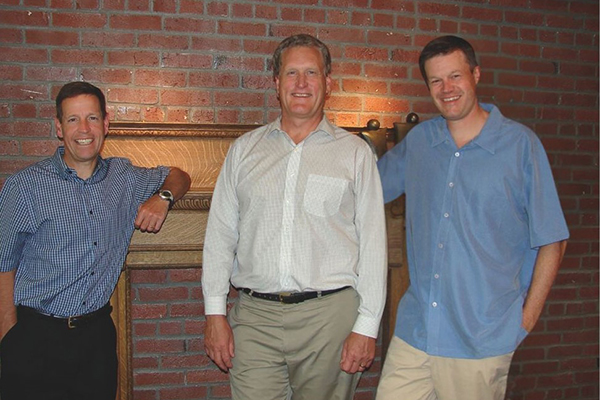
Dave Halsey, Pat Burns, and Jim Rodway
In 1999 Dave Halsey, Jim Rodway, and Pat Burns bought Patrick Lumber from Bob McCracken, Ron Yeager, and Tom Carstensen. Halsey had come to the company in 1997, and Burns was C.C. Patrick’s grandson who earned his stake rather than inherited it. The purchase kept Patrick what it had always been, a closely held company owned by the people who work in it. Jack Patrick, long retired, still came to the office every day. The handoff carried the company into its second century without changing what it was.

1990
The Spotted Owl Years
The northern spotted owl was listed and federal timber came off the market across Oregon, Washington, and California. The supply of high-grade Douglas fir and cedar tightened almost overnight. Log prices climbed while a recession held lumber prices down, and by the end of 1993 the business had shrunk by nearly half. Patrick sold the two remanufacturing plants it had built and went back to trading wood and outsourcing the milling. A base of thousands of customers carried the company through. It came out smaller, and it came out standing.
1980
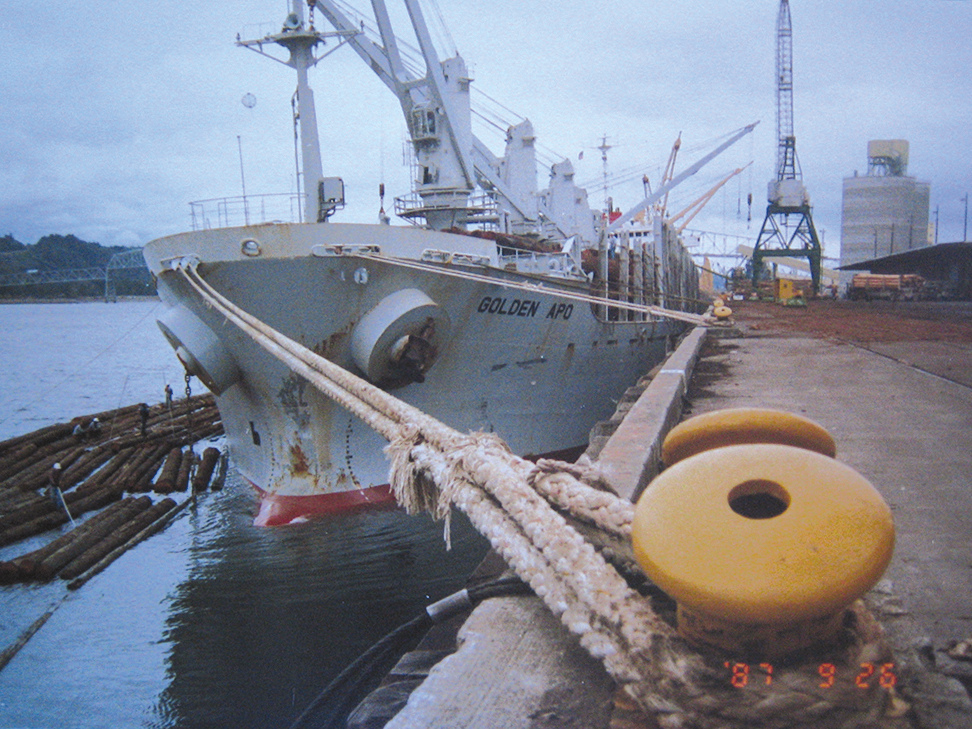
Eighty Percent Export
Bob McCracken became president in 1976 and turned the company toward the world. He opened the Australian market and built the trade through Europe, working buyers in the U.K., Italy, and Germany. Within a few years Patrick had gone from roughly 80 percent domestic sales to roughly 80 percent export. High-grade Douglas fir and cedar left the Pacific Northwest by the shipload, and export stayed the core of the business for decades.
1974
Leadership
By the mid-1970s a new generation was running the company. Bob McCracken succeeded Jack Patrick as president in 1976, with Ron Yeager on the buying side, Tom Carstensen building the domestic and European trade, and Les Oliver keeping the books. Jack Patrick, who had led Patrick since 1967, wound down but still turned up at the office. It was a stable, closely held team, and it would hold the company together through the boom, the bust, and the export decades ahead.
1970
International Markets
In the early 1970s Bob McCracken made a deliberate bet on selling overseas. The domestic market was crowded and thin on margin, and there was room abroad for a trader willing to go find it. McCracken began building books of business in Europe and Australia, markets most Portland wholesalers left alone. It was the start of a shift that would remake the company, and within a decade export was the larger half of everything Patrick did.
1967
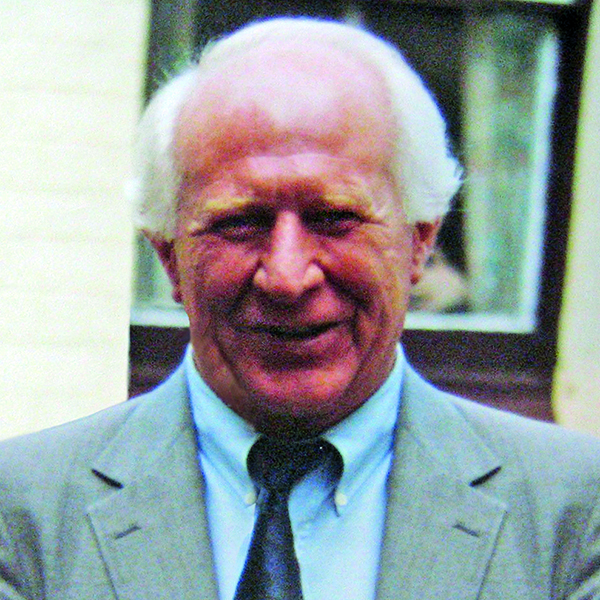
Ron Yeager
Ron Yeager joined Patrick in 1967 to handle the buying side of the business. He had started in wood in 1945 at age fourteen, pulling green chain at his father’s remanufacturing plant, and had worked his way up to sales manager at McKenzie River Lumber, one of Patrick’s own suppliers. He knew mills from the inside, and he knew McCracken. His timing was good: the company was filling large Vietnam-era orders, including a single November 1968 order for 11.2 million board feet. Yeager would help run Patrick for the next three decades.
1957
Bob McCracken
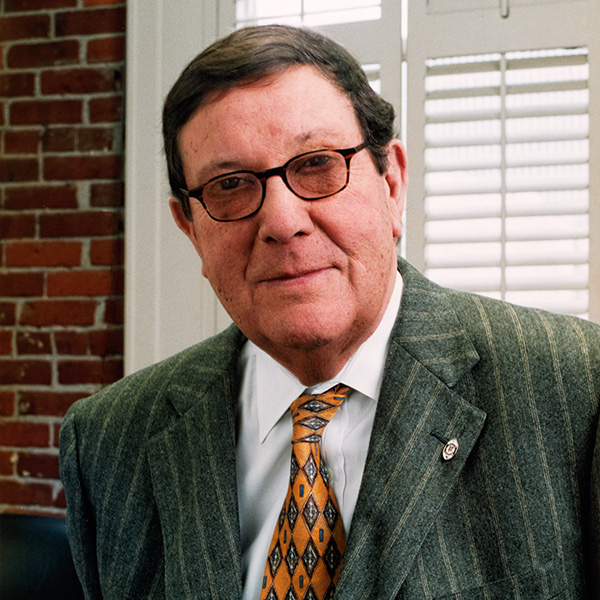
Bob McCracken came to Patrick Lumber on September 1, 1957, but not before Jack Patrick sent him to earn it, working the floor of a Portland furniture mill until he had had enough. He arrived with a University of Oregon economics degree and a brother, Paul, already known in the trade. C.C. Patrick did not trust the newcomer at first and seated him ten feet from his own desk so he could hear every deal and read every letter. McCracken started on commons and specialty items for domestic mills. He would become the most influential figure of his generation at Patrick, and the man who turned the company toward the world.
1941 – 1945
The War Years
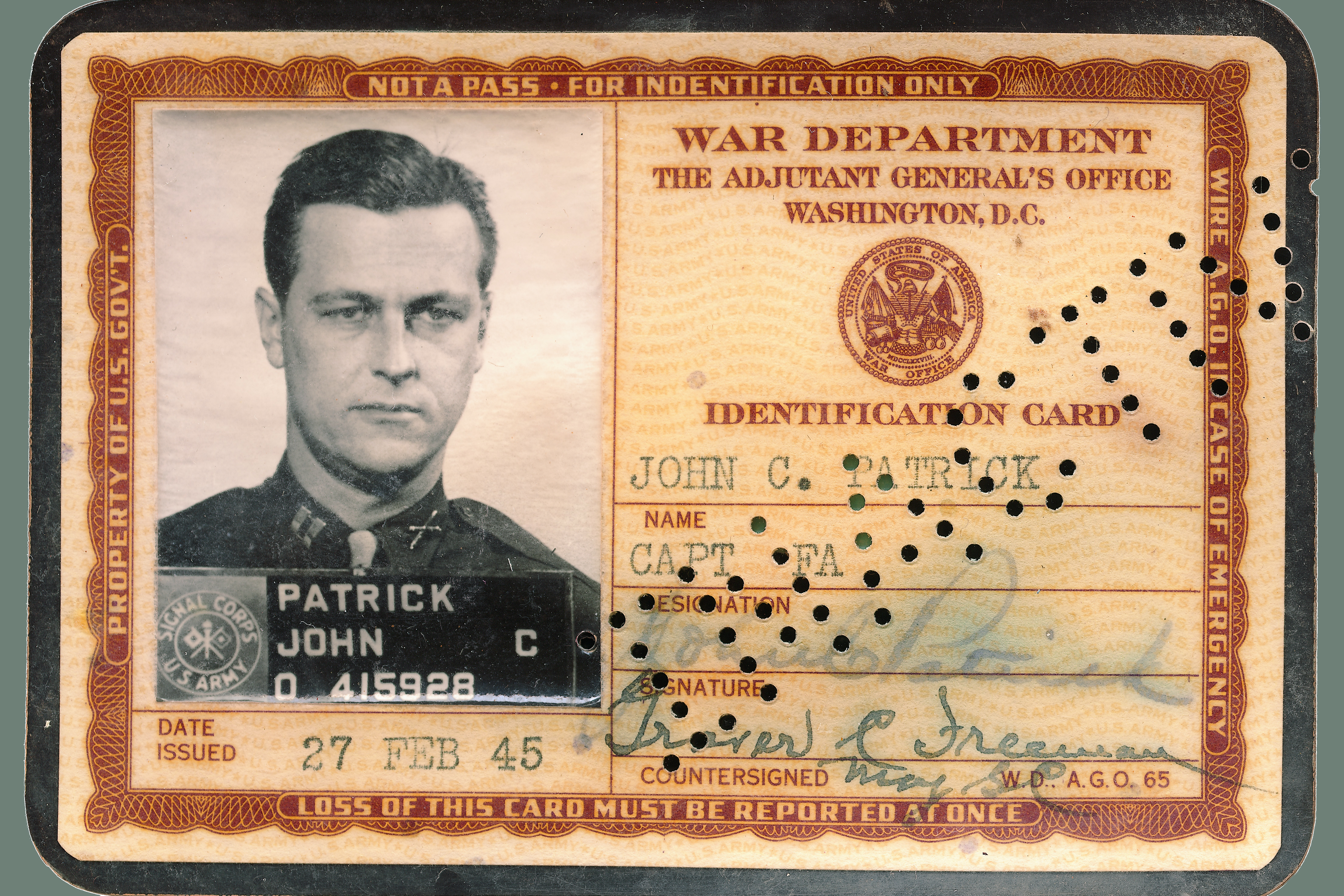
World War II brought Patrick some of its best years yet. Orders for barracks lumber and for pilings, including piling to reinforce the Panama Canal, pushed sales to record highs, from about $860,000 in 1940 to $2.12 million in 1942. In 1943 the company furnished three massive fir derrick booms, one of them 130 feet long, for a naval ship-repair yard at Terminal Island in California. Specialty wood for the war effort became a proving ground, and the relationships built in those years outlasted the fighting.

1939
The New York World's Fair
By the late 1930s poles and piling had become a real part of the business, and Jim Shaw ran the department. He won the contract to supply pilings for the 1939 New York World’s Fair, a 1,219-acre build that took three years and drew more than 44 million visitors. Flatcars of Oregon piling went east between 1936 and 1938, and the work built lasting ties with piling operators in Roseburg and Drain. It was proof that a Portland wholesaler could land a specialty order anywhere in the country.
1928
Surpassing $1,000,000 in Annual Sales
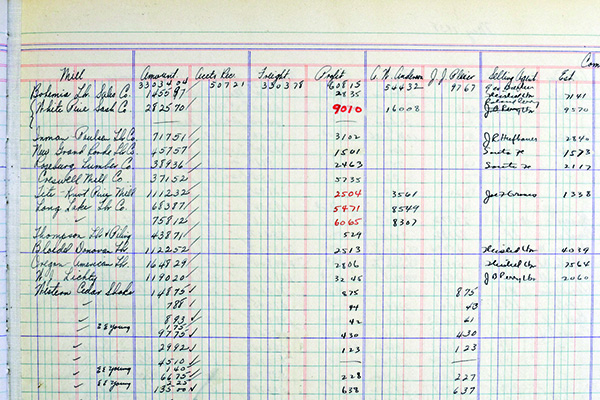
The 1920s were good years, and 1928 was the peak of them. The company booked its first $100,000 sales months, six of them that year, and topped $1,000,000 in annual sales for the first time. C.C. Patrick ran a conservative shop, pouring profits back into the business instead of paying them out, and that discipline mattered. When the market crashed in October 1929 and the Depression followed, the earnings he had banked carried the company through a decade of losses.
1915
Articles of Incorporation
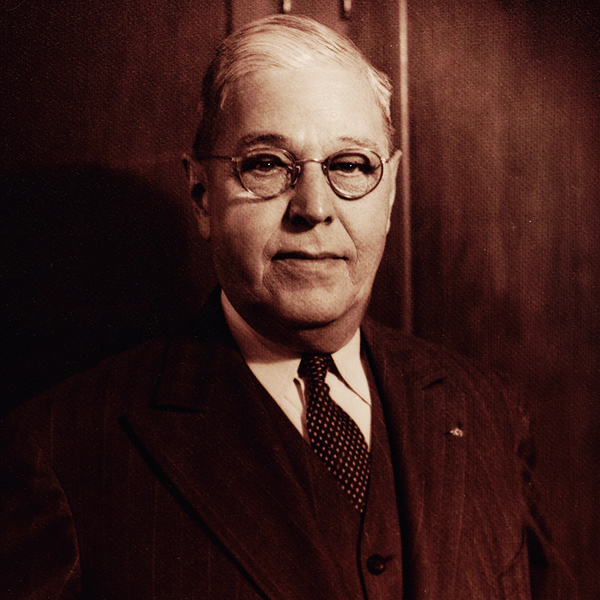
Charlie Patrick saw his opening late in 1914 and drew up a wholesale lumber business, one that would trade wood without owning a mill. The Patrick Company’s articles were filed with the State of Oregon on January 23, 1915, with $5,000 in capital. C.C. took the bulk of the fifty shares, his colleague Bill Brushoff took a small stake, and his father, James P. Patrick, a Civil War veteran, took one. It was one of the earliest lumber trading firms in Portland. The name changed to Patrick Lumber Company in 1923, and the company has run continuously ever since.
1904
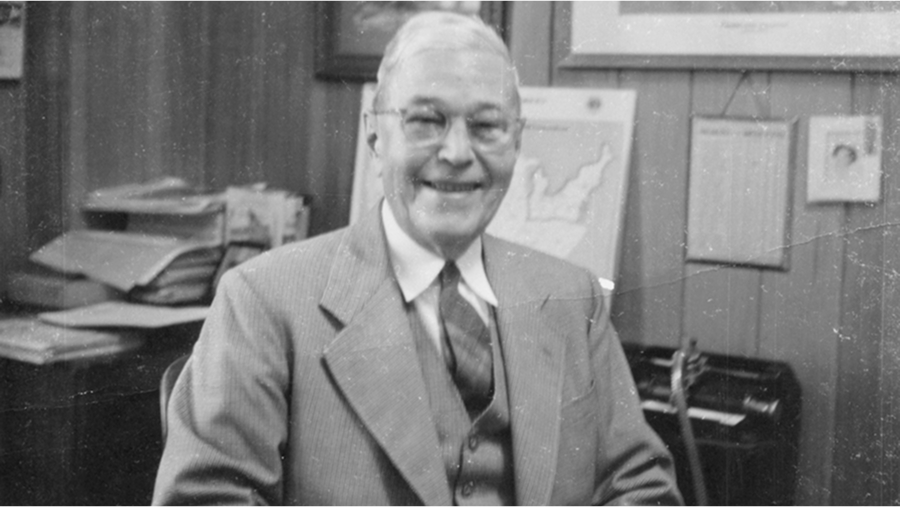
Charles C. Patrick
Charles C. Patrick left Amherst College without a degree, worked a foundry in Des Moines and a sales job out of Sioux City, then went west. In late 1904 he landed a job selling lumber for the Tongue Point Lumber Company in Astoria, at the mouth of the Columbia, a brand-new mill billed as the finest in the world. He learned the trade from the price list up: timbers, moulded stock, siding, well tubing, the whole run. He was twenty-five, selling wood on the river that would carry his name for the next century.
Request a Book
Want to learn more about the history of Patrick Lumber? Contact us for a free copy of the book “Business is Good” to explore the first 100 years of Patrick Lumber Company.